
How NJ Winters Damage Home Exteriors in Hackettstown NJ and How Soft and Powerwash LLC Helps
- Marco Acevedo
- 4 hours ago
- 5 min read

A New Jersey winter does not have to bring a major storm to wear down a home’s exterior. In Hackettstown and nearby towns, the real damage often comes from the daily mix of moisture, freezing nights, thawing afternoons, shaded surfaces, and road salt. By the time spring arrives, siding can look dull, walkways can turn slick, and decks or patios may hold stains that were not there in the fall.
This is why exterior cleaning is more than a spring refresh. It is part of protecting the surfaces that take the hardest hit all winter.

New Jersey winters create the perfect moisture problem
Hackettstown sits in a part of New Jersey where winter weather can change fast. A morning may start frozen, warm up enough to melt snow, then drop below freezing again after sunset. That cycle leaves moisture sitting on siding, trim, brick, concrete, decks, and fences.
Moisture by itself is not always the problem. The trouble starts when it lingers.
Shaded areas on the north side of a home may stay damp for days. Bushes close to the house can trap wet air against siding. Gutters that overflow can streak dirty water down fascia and walls. Patios and retaining walls can collect runoff, leaves, and soil. Once grime has a wet surface to cling to, it spreads quickly.
That damp film often becomes a home for organic growth. Homeowners may notice:
Green algae on siding or fences
Black streaks near gutters or trim
Mildew-like staining on shaded walls
Slippery patches on steps, patios, or walkways
Dirt lines where snow piles sat against the house
In towns like Long Valley, Mount Olive, Mendham, and Panther Valley, wooded lots and shaded yards can make this worse. Trees help block wind and add privacy, but they also slow drying time.
Freeze-thaw cycles open the door to surface damage
One of the hardest parts of a New Jersey winter is the freeze-thaw cycle. Water seeps into tiny gaps, pores, and surface cracks. When it freezes, it expands. When it thaws, it leaves room for more water to enter. Over time, that repeated expansion can stress exterior materials.
Concrete, pavers, brick, stone, and older painted surfaces are especially exposed. Small cracks can become more noticeable. Loose dirt can settle into joints. Salt and sand from nearby roads or driveways can add another layer of wear.
This does not mean every surface needs aggressive cleaning. In fact, too much force can make some problems worse. That is why the method matters.
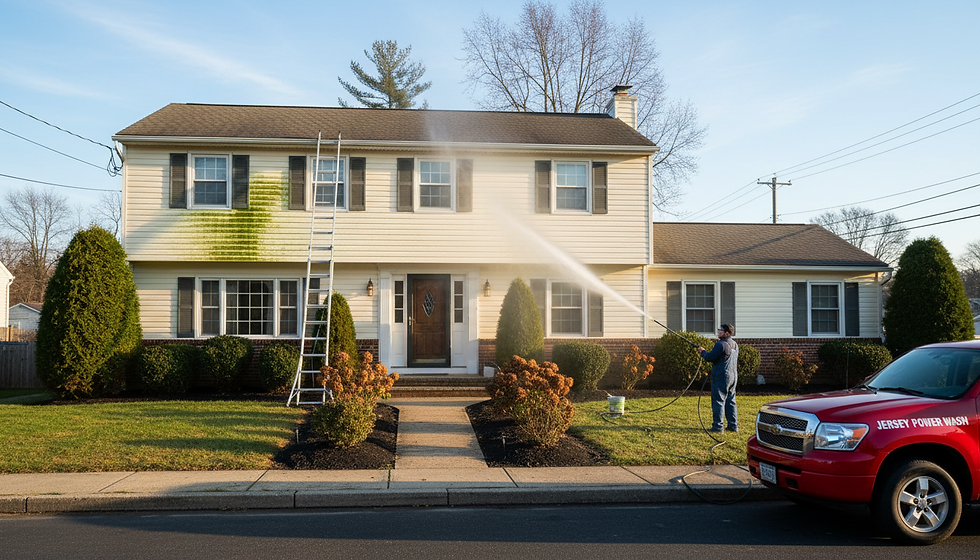
Soft washing uses lower pressure with the right cleaning solution for siding, trim, and more delicate exterior areas. Power washing or pressure washing may be a better fit for tougher surfaces like certain concrete or stone, depending on their condition. A careful inspection helps decide which approach is safest.

Mold, mildew, and algae do not take winter off
Many people think mold and algae are only warm-weather issues. They may grow faster in warm months, but winter moisture sets the stage. When surfaces stay wet and dirty, organic growth has what it needs to hold on.
By early spring, siding may have green patches near foundation plantings. Deck railings may look dark where snow sat against them. Outdoor furniture may show mildew stains after spending the season under covers. Brick steps may feel slick. These are not just cosmetic problems.
Slick algae on stairs or walkways can become a safety concern. Mildew staining can make a well-kept property look older than it is. Dirty siding can hide early signs of wear. Regular house washing helps remove buildup before it becomes harder to clean.
This is also where home exterior improvements do not always mean replacing materials or starting a major project. Sometimes the smartest improvement is removing the grime that is already working against the home.
Salt, grime, and winter debris dull curb appeal
Winter leaves behind a very specific kind of mess. Road salt gets tracked onto driveways and walkways. Snow piles push dirt against fences and lower siding. Dead leaves collect behind steps and patio furniture. Wind carries grit onto porches and entryways.
By March or April, even a newer home can look tired.
A good exterior cleaning plan can help restore curb appeal without repainting or replacing anything. The right mix of power washing, pressure washing, house washing, and an outdoor furniture wash can brighten the property from the driveway to the backyard patio.
The key is using the right pressure for each surface. Vinyl siding, painted trim, composite decking, wood fencing, pavers, concrete, and patio sets all respond differently. A one-size-fits-all blast of water is not the answer.

Soft and Powerwash LLC brings local know-how to Hackettstown homes
Soft and Powerwash LLC serves Hackettstown and nearby communities with an understanding of what local homes face each winter. The mix of hills, trees, older homes, newer developments, shaded yards, and changing weather creates cleaning needs that are different from a dry or mild climate.
Local experience matters because exterior cleaning is not just about making surfaces look clean for a day. It is about choosing the safest method for the material and the season.
A thoughtful winter-to-spring cleaning plan may include:
A soft wash for siding with algae, mildew, or oxidation concerns
Careful cleaning around trim, gutters, and entryways
Pressure washing for suitable concrete, walkways, or patios
Cleaning for decks, fences, and outdoor furniture
Attention to shaded areas where growth returns faster
Soft and Powerwash LLC can also help homeowners spot patterns. If one side of the home always turns green, the issue may be shade, drainage, landscaping, or gutter overflow. Cleaning removes the buildup, but knowing why it returns helps plan better maintenance.
The best time to deal with winter damage is before it settles in
Spring is a natural time to wash away winter grime, but waiting too long gives stains more time to bond. Once pollen, spring rain, and warmer temperatures arrive, existing algae and mildew can spread faster.
A seasonal exterior cleaning after winter helps reset the home before outdoor living begins. Patios look more inviting. Walkways feel cleaner underfoot. Siding looks brighter. Outdoor furniture becomes ready to use again.

NJ winters are tough because they combine moisture, freezing temperatures, thawing, humidity, salt, and shade. Those conditions work slowly, but the results show up all at once when the snow is gone.
For homes in Hackettstown, Mendham, Long Valley, Panther Valley, and Mount Olive, regular exterior cleaning is one of the simplest ways to protect surfaces and keep the property looking cared for. Soft and Powerwash LLC helps remove the winter layer safely, so the home is ready for the brighter months ahead.

Comments